

First, Second, Third...
Learn to describe position and order
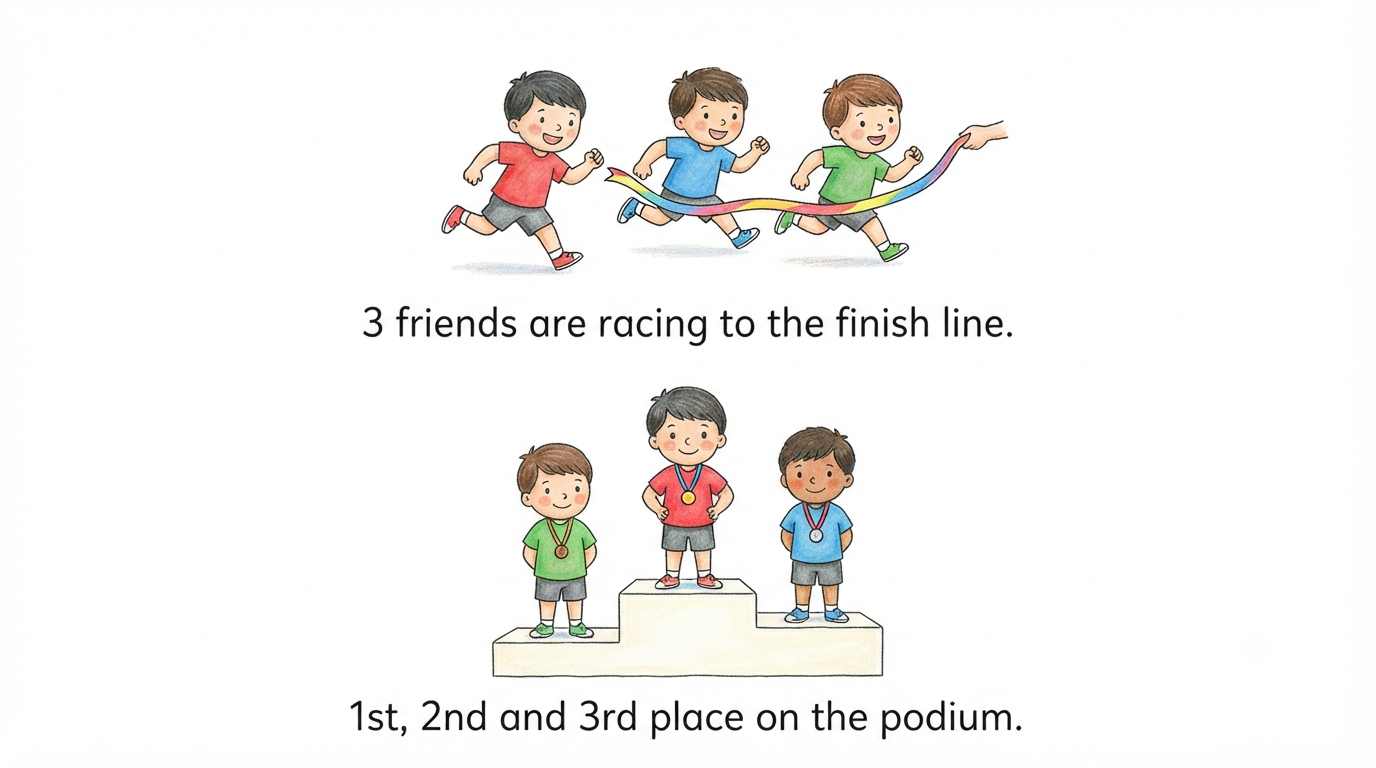
Ordinal numbers tell us the position of something in a line, like who came first in a race or which cookie is third in a row. This page lets children pick a position and instantly see which object in a lineup it points to.
पहला, दूसरा, तीसरा...
स्थान और क्रम बताना सीखें
क्रमसूचक संख्याएं हमें किसी चीज़ का पंक्ति में स्थान बताती हैं, जैसे दौड़ में कौन पहले आया या पंक्ति में कौन सी कुकी तीसरी है। इस पेज पर, कोई स्थान चुनें और तुरंत देखें कि पंक्ति में वह किस चीज़ की ओर इशारा करता है।
How Do Ordinal Numbers Work?
Follow along, step by step
Line Everyone Up 🚶
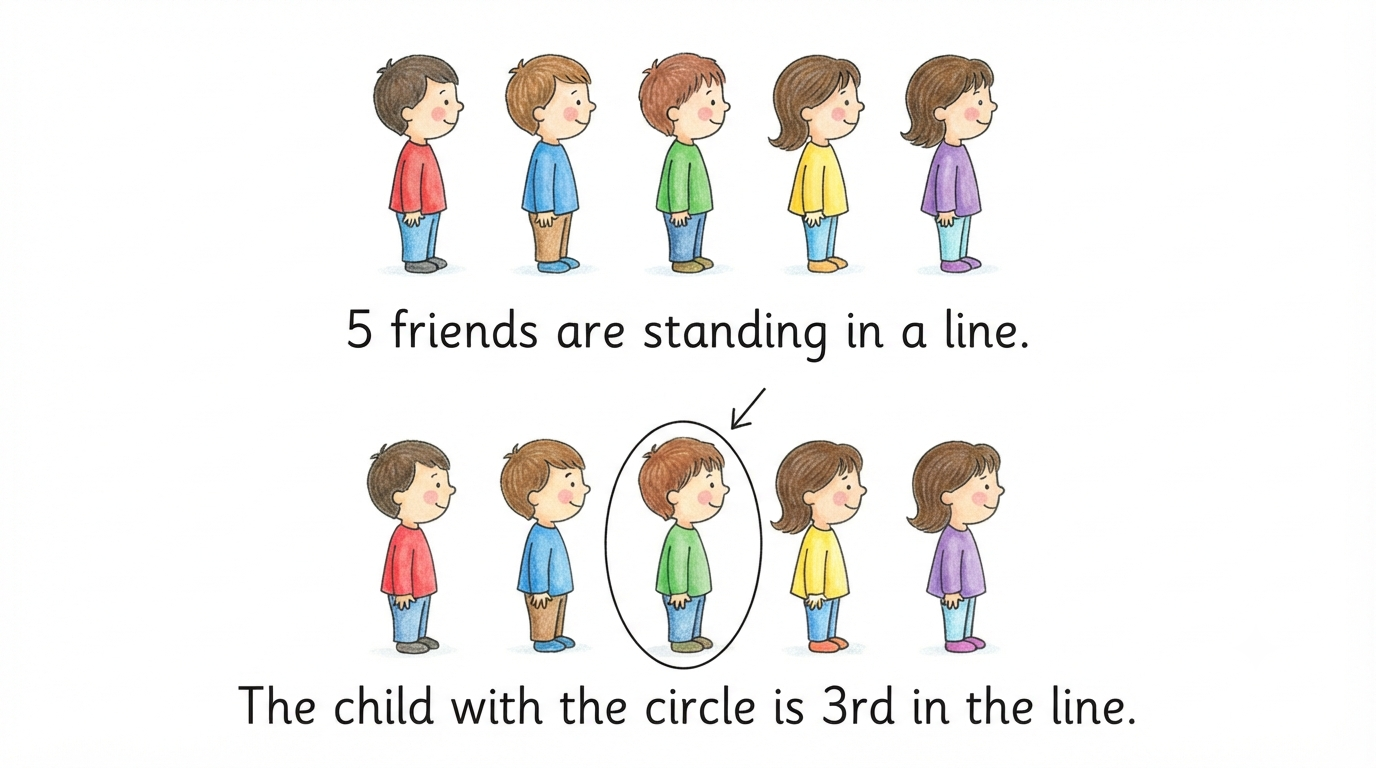
Imagine 10 friends standing in a line, one behind the other, waiting for a turn.
सबको एक पंक्ति में खड़ा करें
मान लीजिए 10 दोस्त एक पंक्ति में खड़े हैं, एक के पीछे एक, अपनी बारी का इंतज़ार करते हुए।
Find the Position You Want 🥇
Pick a spot in the line - like the 3rd person. This tells you exactly where to look.
जो स्थान चाहिए वह ढूंढें
पंक्ति में कोई जगह चुनें - जैसे तीसरा व्यक्ति। यह आपको बताता है कि बिल्कुल कहां देखना है।
Count From the Start 👉
Starting from the very front, count 1st, 2nd, 3rd... until you reach the position you picked.
शुरुआत से गिनें
बिल्कुल आगे से शुरू करके, पहला, दूसरा, तीसरा... गिनें जब तक आप अपनी चुनी हुई जगह तक नहीं पहुंच जाते।
Say the Ordinal Word 📢
Instead of saying "3", we say "3rd" or "third" - this special word tells everyone the exact position, not just a count.
क्रमसूचक शब्द बोलें
"3" कहने की बजाय, हम "तीसरा" कहते हैं - यह खास शब्द सबको सही स्थान बताता है, सिर्फ गिनती नहीं।
Try It Yourself! 🎮
Use the tool above - pick any position, click "Show Me!", and see exactly which friend it points to.
खुद आज़माएं!
ऊपर दिए टूल का इस्तेमाल करें - कोई भी स्थान चुनें, "Show Me!" पर क्लिक करें, और देखें वह ठीक किस दोस्त की ओर इशारा करता है।
Ordinal numbers describe the position or order of something, not how many there are. Instead of saying "3", we say "3rd" or "third" to describe something's place in a line - like the third person in a queue, or the third house on a street.
This page lines up ten friendly objects in a row, and lets children pick any position to see exactly which object it refers to, along with how to say and write that ordinal number correctly.
क्रमसूचक संख्याएं किसी चीज़ की स्थिति या क्रम बताती हैं, न कि कितनी चीज़ें हैं। "3" कहने की बजाय, हम "तीसरा" कहते हैं यह बताने के लिए कि कोई चीज़ किसी पंक्ति में किस स्थान पर है - जैसे कतार में तीसरा व्यक्ति, या सड़क पर तीसरा घर।
यह पेज दस दोस्ताना चीज़ों को एक पंक्ति में लगाता है, और बच्चों को कोई भी स्थान चुनने देता है यह देखने के लिए कि वह ठीक किस चीज़ की ओर इशारा करता है, साथ में यह भी कि उस क्रमसूचक संख्या को सही तरीके से कैसे कहें और लिखें।
Frequently Asked Questions
At what age should kids learn ordinal numbers?
Most children start learning basic ordinal numbers, like first, second and third, between ages 4 and 6, often through games and everyday routines.
What is the difference between a regular number and an ordinal number?
A regular number like "3" tells you how many things there are, while an ordinal number like "3rd" tells you the position of something in a line or order.
What is an easy way to practice ordinal numbers at home?
Lining up toys or family members and asking "who is first, who is second, who is third" is a simple, fun way to practice ordinal numbers in everyday life.
बच्चों को क्रमसूचक संख्याएं किस उम्र में सिखानी चाहिए?
ज़्यादातर बच्चे 4 से 6 साल की उम्र में पहला, दूसरा और तीसरा जैसी बुनियादी क्रमसूचक संख्याएं सीखना शुरू करते हैं, अक्सर खेलों और रोज़मर्रा की गतिविधियों के ज़रिए।
सामान्य संख्या और क्रमसूचक संख्या में क्या फ़र्क है?
"3" जैसी सामान्य संख्या बताती है कि कितनी चीज़ें हैं, जबकि "3rd" जैसी क्रमसूचक संख्या बताती है कि कोई चीज़ किसी क्रम या पंक्ति में किस स्थान पर है।
घर पर क्रमसूचक संख्याओं का अभ्यास करने का एक आसान तरीका क्या है?
खिलौनों या परिवार के सदस्यों को एक पंक्ति में खड़ा करना और पूछना "कौन पहला है, कौन दूसरा है, कौन तीसरा है" रोज़मर्रा की ज़िंदगी में क्रमसूचक संख्याओं का अभ्यास करने का एक सरल, मज़ेदार तरीका है।