
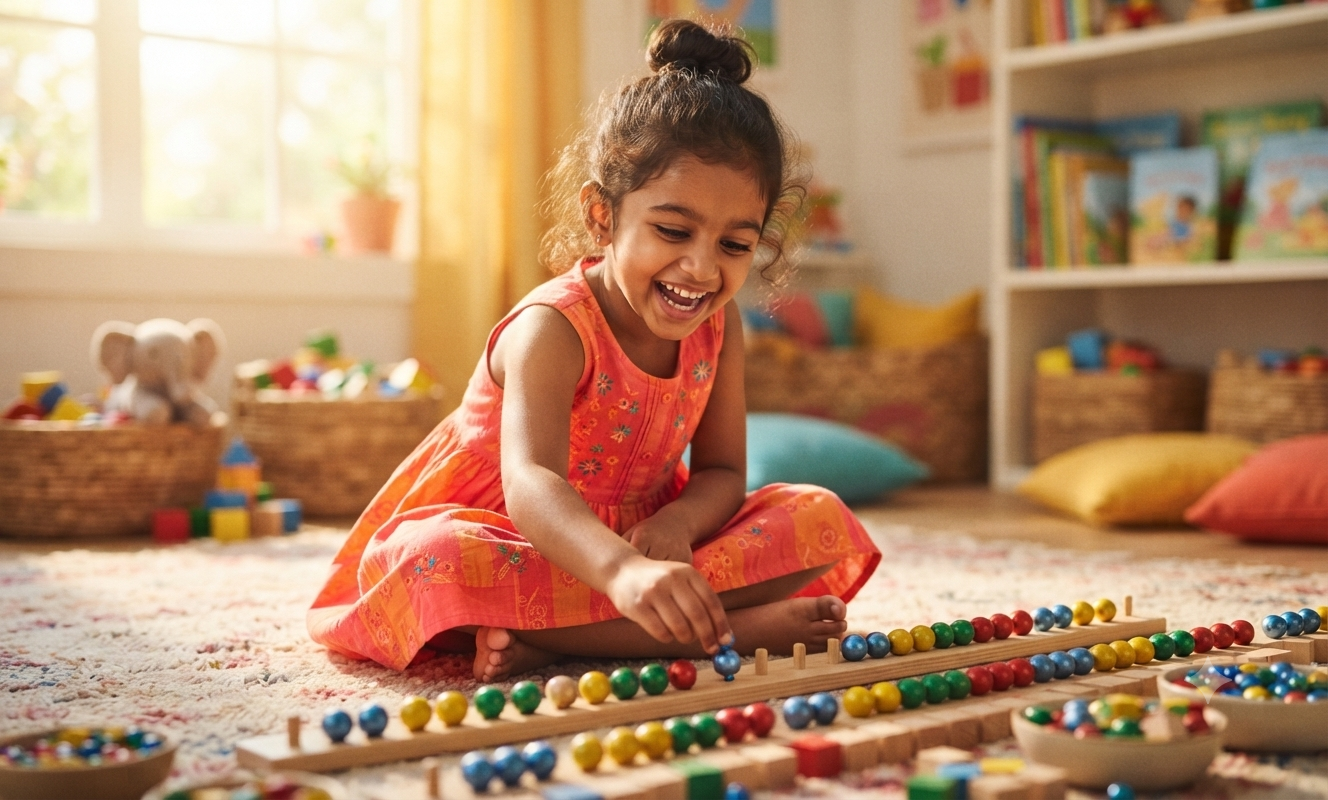
What Comes Next?
Spot the pattern and complete it
A pattern is something that repeats in a predictable way, and being able to spot what comes next is an important early math skill. This page shows children a repeating sequence of shapes or colours with one missing, and lets them figure out exactly what belongs there.
आगे क्या आएगा?
पैटर्न पहचानें और उसे पूरा करें
पैटर्न कुछ ऐसा है जो एक अनुमानित तरीके से दोहराता है, और यह जानना कि आगे क्या आएगा, एक ज़रूरी शुरुआती गणित कौशल है। इस पेज पर बच्चों को आकृतियों या रंगों का एक दोहराया हुआ क्रम दिखता है जिसमें एक हिस्सा गायब है, और वे पता लगाते हैं कि वहां बिल्कुल क्या आना चाहिए।
How Do You Spot a Pattern?
Follow along, step by step
Look at the Whole Sequence 👀
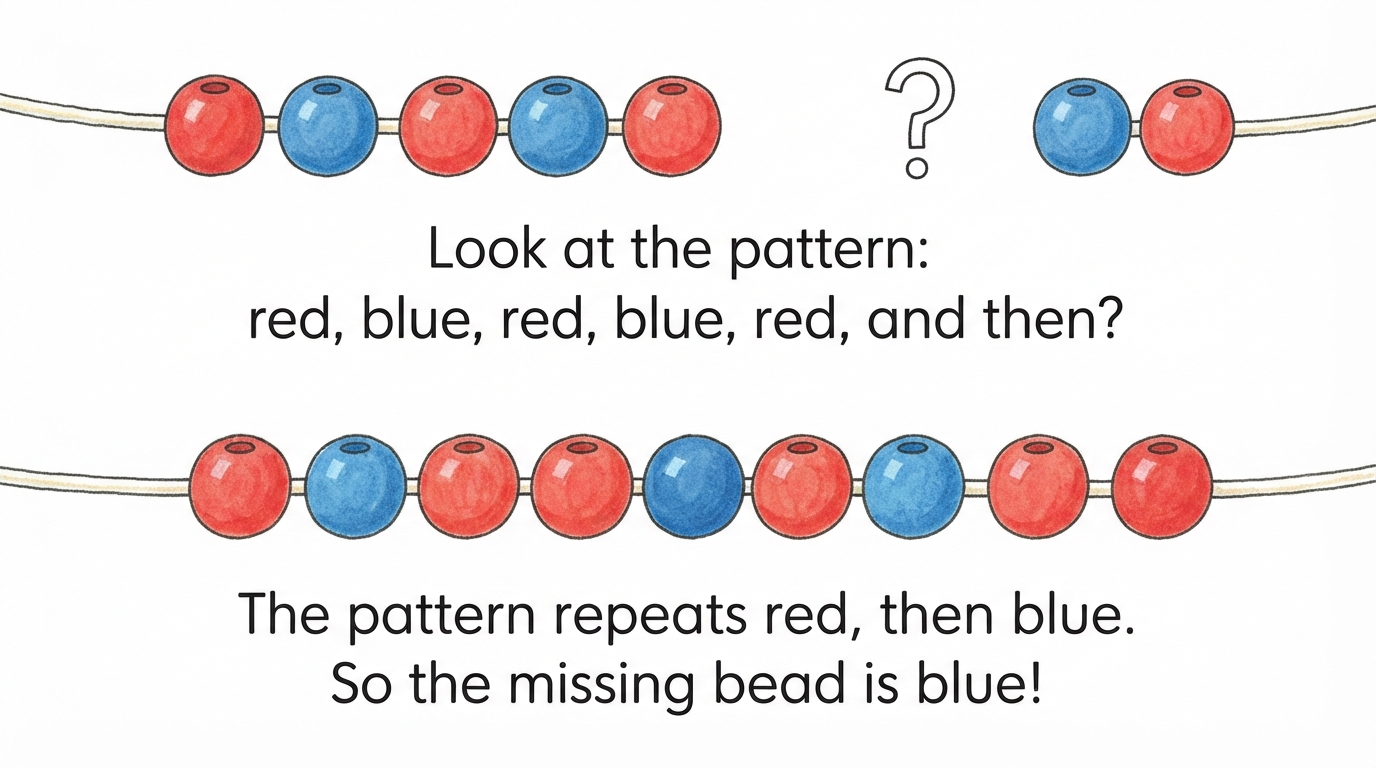
Let's say you see: red, blue, red, blue, red, ___. Look at everything before the blank carefully.
पूरे क्रम को देखें
मान लीजिए आप देखते हैं: लाल, नीला, लाल, नीला, लाल, ___। खाली जगह से पहले सब कुछ ध्यान से देखें।
Find What Repeats 🔁
Notice that "red, blue" keeps repeating, over and over, in exactly the same order.
देखें क्या दोहराता है
ध्यान दें कि "लाल, नीला" बार-बार, बिल्कुल एक ही क्रम में दोहराता रहता है।
Predict the Next One 🧩
Since red just came, and the pattern always goes red-then-blue, the next one must be blue.
अगले का अनुमान लगाएं
चूंकि अभी लाल आया है, और पैटर्न हमेशा लाल-फिर-नीला जाता है, अगला ज़रूर नीला होना चाहिए।
Check It Fits ✅
Put blue in the blank and read the whole sequence again - does it still follow the same repeating pattern? Yes!
जांचें कि यह फिट बैठता है
खाली जगह में नीला रखें और पूरा क्रम फिर से पढ़ें - क्या यह अभी भी वही दोहराने वाला पैटर्न फॉलो करता है? हां!
Try It Yourself! 🎮
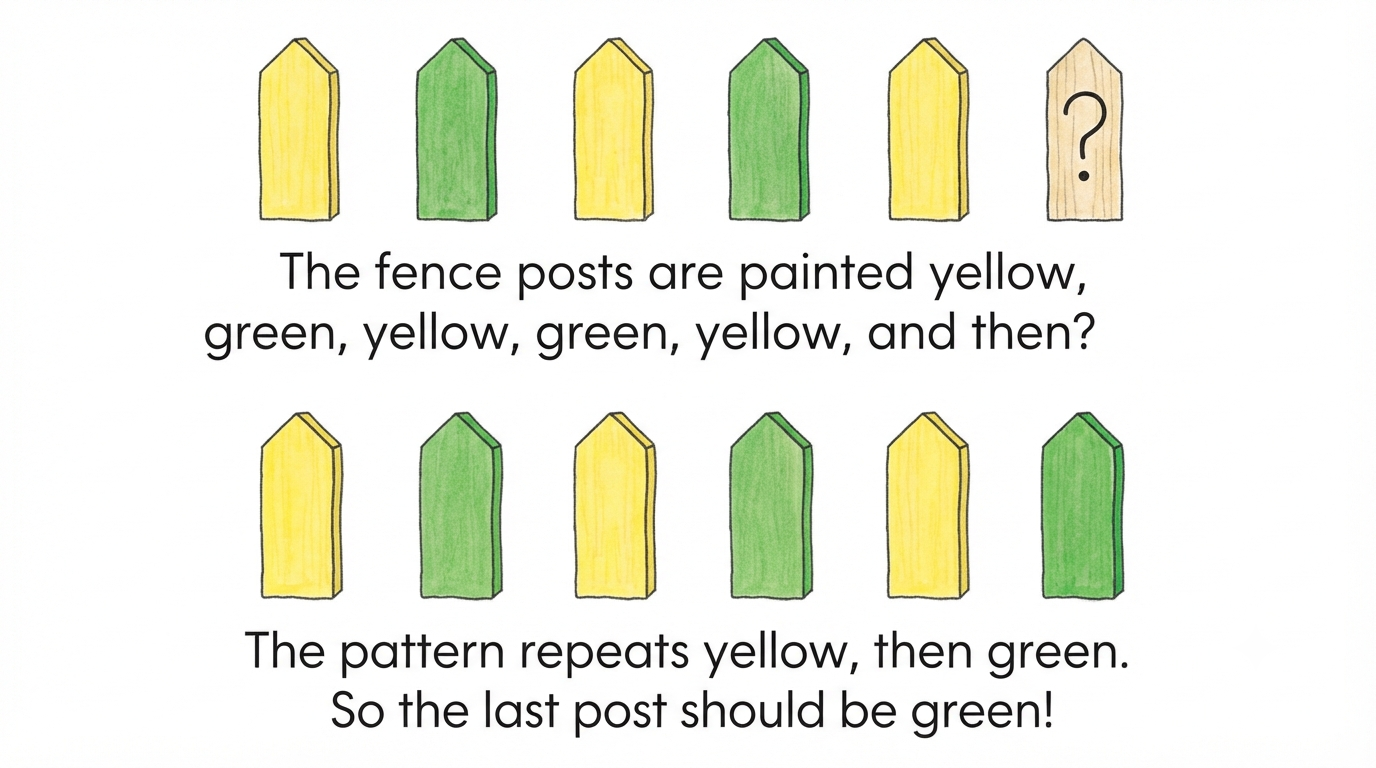
Use the puzzle above - pick what you think comes next, and see if you spotted the pattern correctly!
खुद आज़माएं!
ऊपर दी पहेली का इस्तेमाल करें - जो अगला लगे उसे चुनें, और देखें आपने पैटर्न सही पहचाना या नहीं!
A pattern is a sequence that repeats in the same order, over and over - like red, blue, red, blue, red... Once children notice the repeating part, they can predict exactly what should come next, even without being told.
Spotting patterns is one of the earliest and most important math skills, because it teaches children to look for structure and predict what happens next - a skill that shows up again and again in later math, from skip counting to multiplication tables.
पैटर्न एक ऐसा क्रम है जो बार-बार एक जैसे तरीके से दोहराता है - जैसे लाल, नीला, लाल, नीला, लाल... एक बार जब बच्चे दोहराए जाने वाले हिस्से को नोटिस कर लेते हैं, तो वे बिना बताए भी बता सकते हैं कि आगे क्या आना चाहिए।
पैटर्न पहचानना सबसे शुरुआती और ज़रूरी गणित कौशलों में से एक है, क्योंकि यह बच्चों को संरचना ढूंढना और आगे क्या होगा यह अनुमान लगाना सिखाता है - यह कौशल आगे चलकर स्किप काउंटिंग से लेकर पहाड़ों तक बार-बार काम आता है।
Frequently Asked Questions
At what age should kids start learning about patterns?
Most children start recognising and completing simple patterns, like colour or shape sequences, between ages 3 and 5.
Why are patterns important for early math learning?
Patterns teach children to notice structure and predict what comes next, a foundational skill that later supports skip counting, multiplication tables, and problem solving.
What is the easiest way to teach patterns to a young child?
Using colourful objects or shapes in a simple repeating sequence, and asking "what comes next?", is one of the easiest and most fun ways to introduce patterns.
बच्चों को पैटर्न किस उम्र से सिखाने चाहिए?
ज़्यादातर बच्चे 3 से 5 साल की उम्र में रंग या आकृति के सरल पैटर्न पहचानना और पूरा करना शुरू कर देते हैं।
शुरुआती गणित सीखने के लिए पैटर्न क्यों ज़रूरी हैं?
पैटर्न बच्चों को संरचना पहचानना और आगे क्या होगा यह अनुमान लगाना सिखाते हैं, यह एक बुनियादी कौशल है जो आगे चलकर स्किप काउंटिंग, पहाड़ों और समस्या-समाधान में मदद करता है।
छोटे बच्चे को पैटर्न सिखाने का सबसे आसान तरीका क्या है?
रंग-बिरंगी चीज़ों या आकृतियों का एक सरल दोहराया हुआ क्रम इस्तेमाल करना, और पूछना "आगे क्या आएगा?", पैटर्न से परिचय कराने के सबसे आसान और मज़ेदार तरीकों में से एक है।