
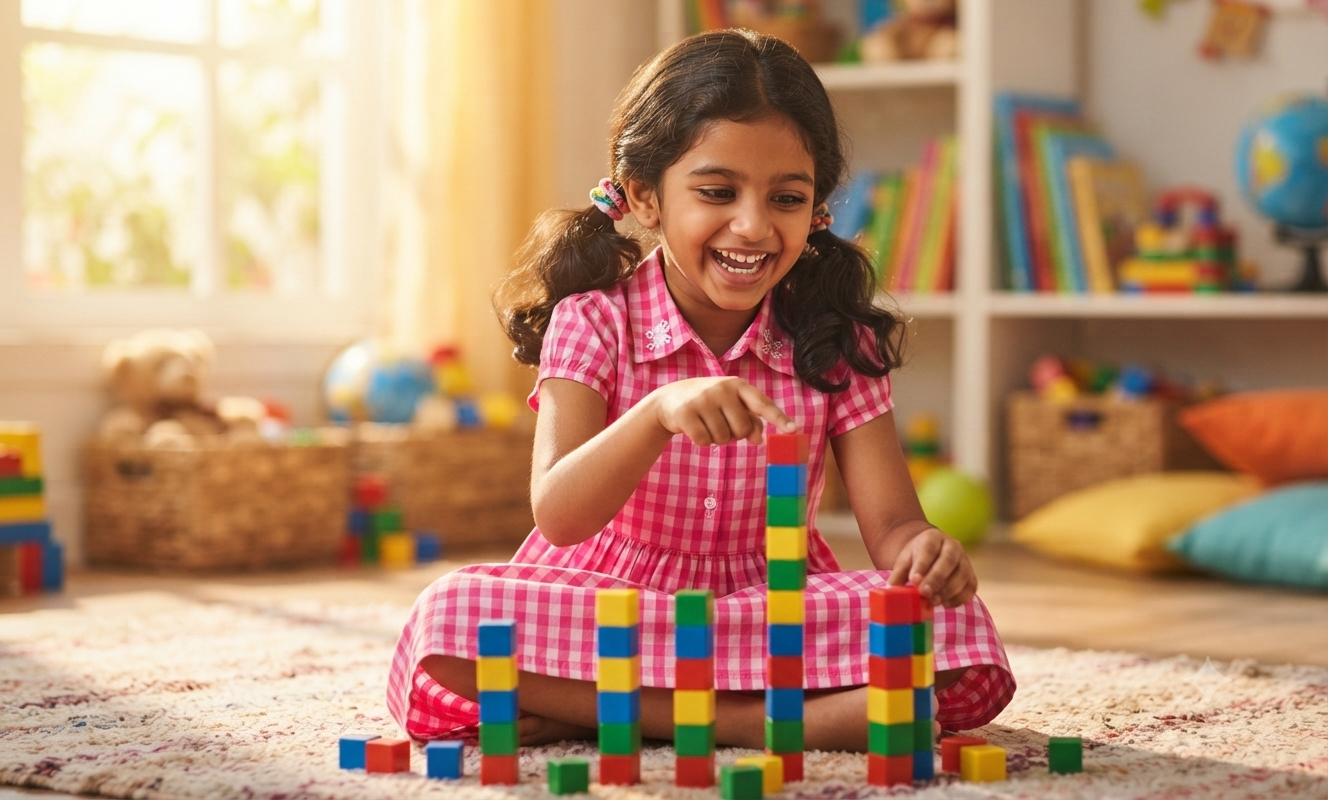
Tens and Ones!
See how every number is built from tens and ones
Every two-digit number is really just a group of tens and a group of ones put together. This page lets children pick any number and instantly see how many tens and how many ones make it up, using simple visual blocks.
दहाई और इकाई!
देखें हर संख्या दहाई और इकाई से कैसे बनती है
हर दो अंकों वाली संख्या वाकई दहाइयों के एक समूह और इकाइयों के एक समूह से मिलकर बनी होती है। इस पेज पर, कोई भी संख्या चुनें और तुरंत देखें उसमें कितनी दहाई और कितनी इकाइयां हैं, सरल दृश्य ब्लॉक्स के ज़रिए।
How Does Place Value Work?
Follow along, step by step
Pick a Number 🔢
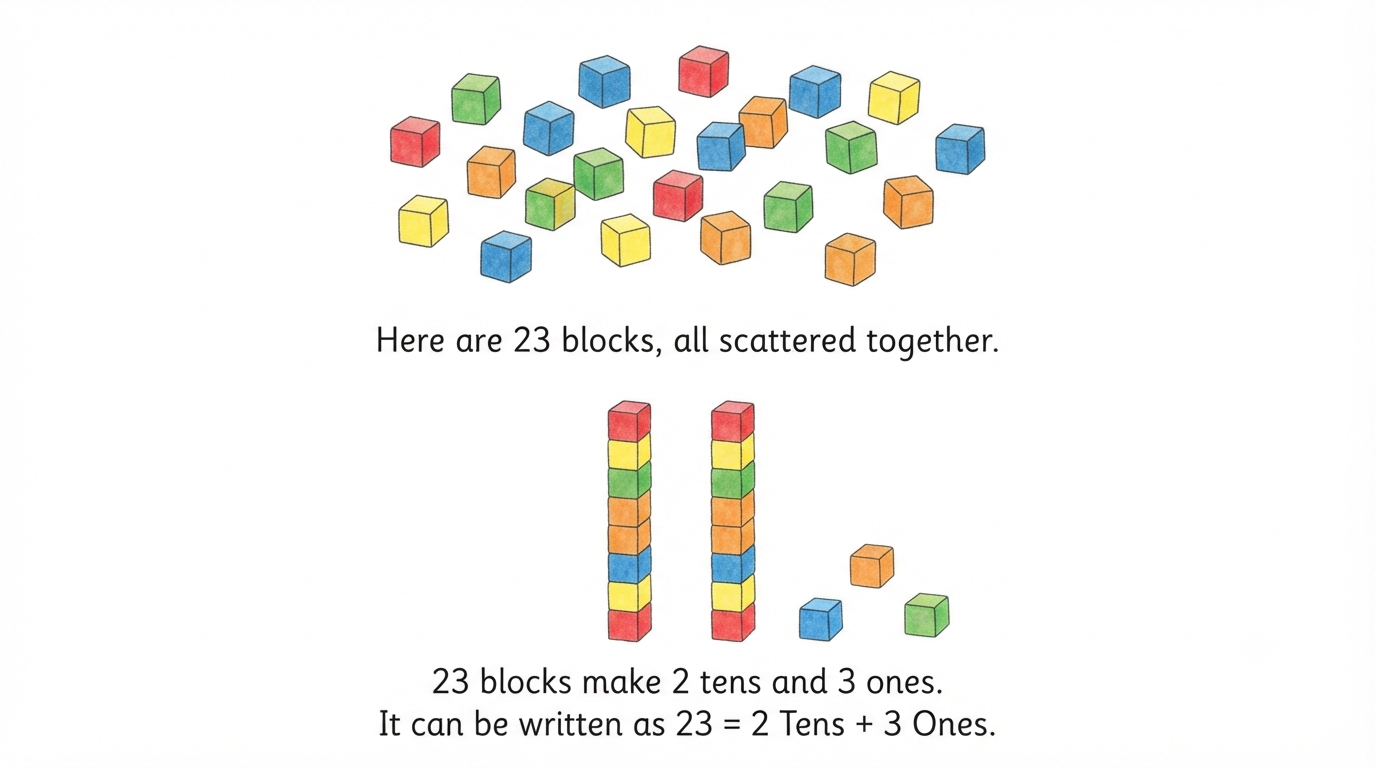
Let's say you pick 23. This number has two digits - a 2 and a 3.
एक संख्या चुनें
मान लीजिए आपने 23 चुना। इस संख्या में दो अंक हैं - 2 और 3।
Count the Tens 📦
The first digit, 2, tells you there are 2 groups of ten - that's 20 all by itself.
दहाई गिनें
पहला अंक, 2, बताता है कि दस के 2 समूह हैं - यह खुद ही 20 है।
Count the Ones 🔹
The second digit, 3, tells you there are 3 single ones left over, on their own.
इकाई गिनें
दूसरा अंक, 3, बताता है कि 3 अकेली इकाइयां बची हैं, अपने आप में।
Put Them Together 🤝
2 tens (20) plus 3 ones (3) makes 23 - the same number you started with!
उन्हें साथ रखें
2 दहाई (20) और 3 इकाई (3) मिलकर 23 बनाते हैं - वही संख्या जिससे आपने शुरुआत की थी!
Try It Yourself! 🎮
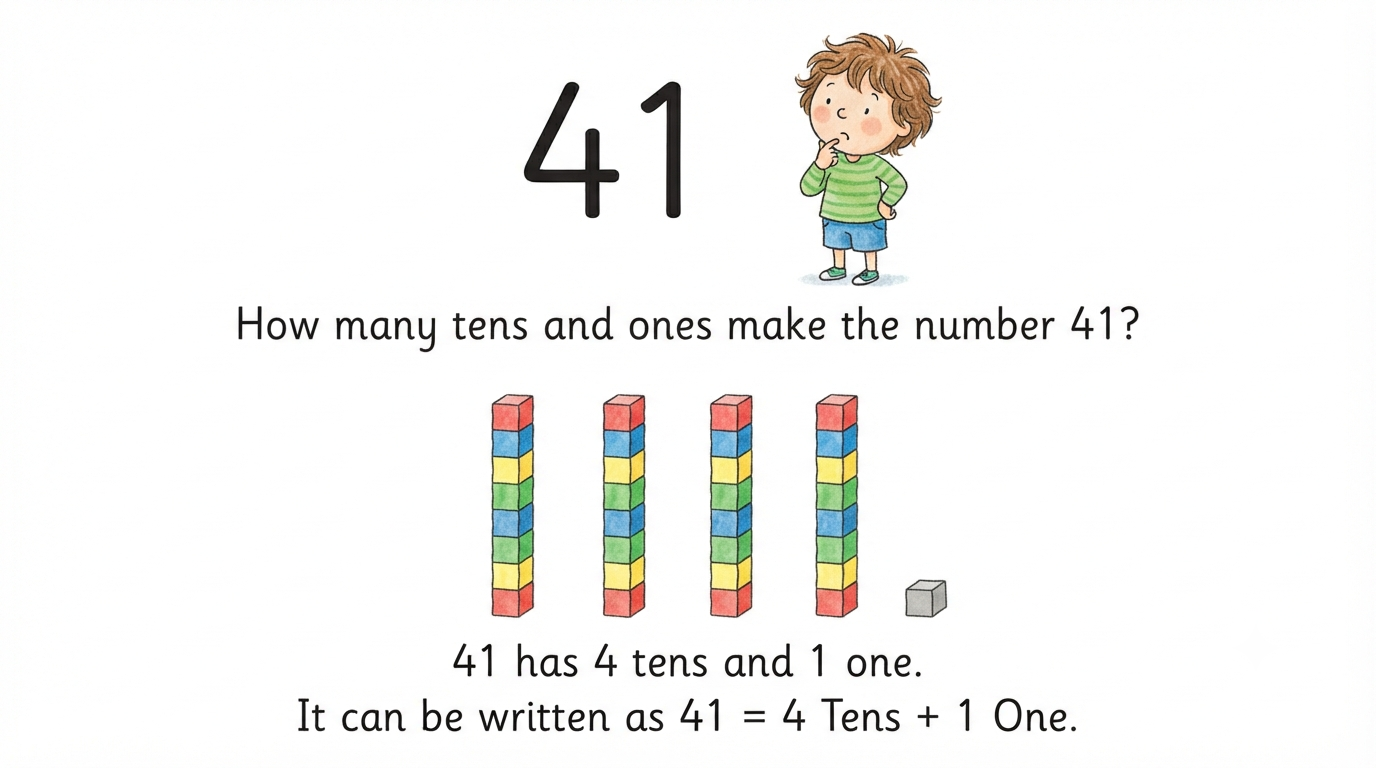
Use the tool above - pick any number, click "Show Me!", and watch it split into tens and ones blocks.
खुद आज़माएं!
ऊपर दिए टूल का इस्तेमाल करें - कोई भी संख्या चुनें, "Show Me!" पर क्लिक करें, और उसे दहाई और इकाई के ब्लॉक्स में बंटते देखें।
Place value means understanding what each digit in a number really stands for, based on its position. In the number 23, the "2" is not just "two" - it actually means 2 TENS, or 20. The "3" means 3 ONES, or just 3. Put together, 2 tens and 3 ones make 23.
This idea is the secret behind how our whole number system works, and seeing it with blocks - a stack of ten for every "ten", and single blocks for the "ones" - makes it click for children in a way that just reading digits never quite does.
स्थानीय मान का मतलब है यह समझना कि किसी संख्या में हर अंक का असली मतलब क्या है, उसकी जगह के आधार पर। संख्या 23 में, "2" सिर्फ "दो" नहीं है - इसका मतलब वाकई 2 दहाई, या 20 है। "3" का मतलब है 3 इकाई, या सिर्फ 3। साथ मिलाकर, 2 दहाई और 3 इकाई मिलकर 23 बनाते हैं।
यह विचार हमारी पूरी संख्या प्रणाली के काम करने का राज़ है, और इसे ब्लॉक्स के साथ देखना - हर "दहाई" के लिए दस का एक ढेर, और "इकाई" के लिए अलग-अलग ब्लॉक्स - बच्चों के लिए इसे समझना आसान बना देता है, जो सिर्फ अंक पढ़ने से कभी नहीं होता।
Frequently Asked Questions
At what age should kids start learning place value?
Most children start learning about tens and ones between ages 6 and 8, once they are confident counting past 20.
Why is place value important for kids to learn?
Place value is the foundation for understanding bigger numbers, carrying and borrowing in addition and subtraction, and eventually numbers in the hundreds and thousands.
What is the easiest way to teach place value to a young child?
Using physical or visual blocks - bundling ten single blocks into one group of ten - helps children see exactly what a digit in the tens place really represents.
बच्चों को स्थानीय मान (place value) किस उम्र से सिखानी चाहिए?
ज़्यादातर बच्चे 6 से 8 साल की उम्र में दहाई और इकाई के बारे में सीखना शुरू करते हैं, एक बार जब वे 20 से आगे आत्मविश्वास से गिनती कर लेते हैं।
बच्चों के लिए स्थानीय मान सीखना क्यों ज़रूरी है?
स्थानीय मान बड़ी संख्याओं को समझने, जोड़-घटाव में carrying-borrowing करने, और आगे चलकर सैकड़ों-हज़ारों तक की संख्याओं की नींव है।
छोटे बच्चे को स्थानीय मान सिखाने का सबसे आसान तरीका क्या है?
असली या तस्वीर वाले ब्लॉक्स का इस्तेमाल करना - दस अलग-अलग ब्लॉक्स को एक दहाई के समूह में बांधना - बच्चों को यह दिखाने में मदद करता है कि दहाई की जगह पर मौजूद अंक असल में क्या दर्शाता है।