
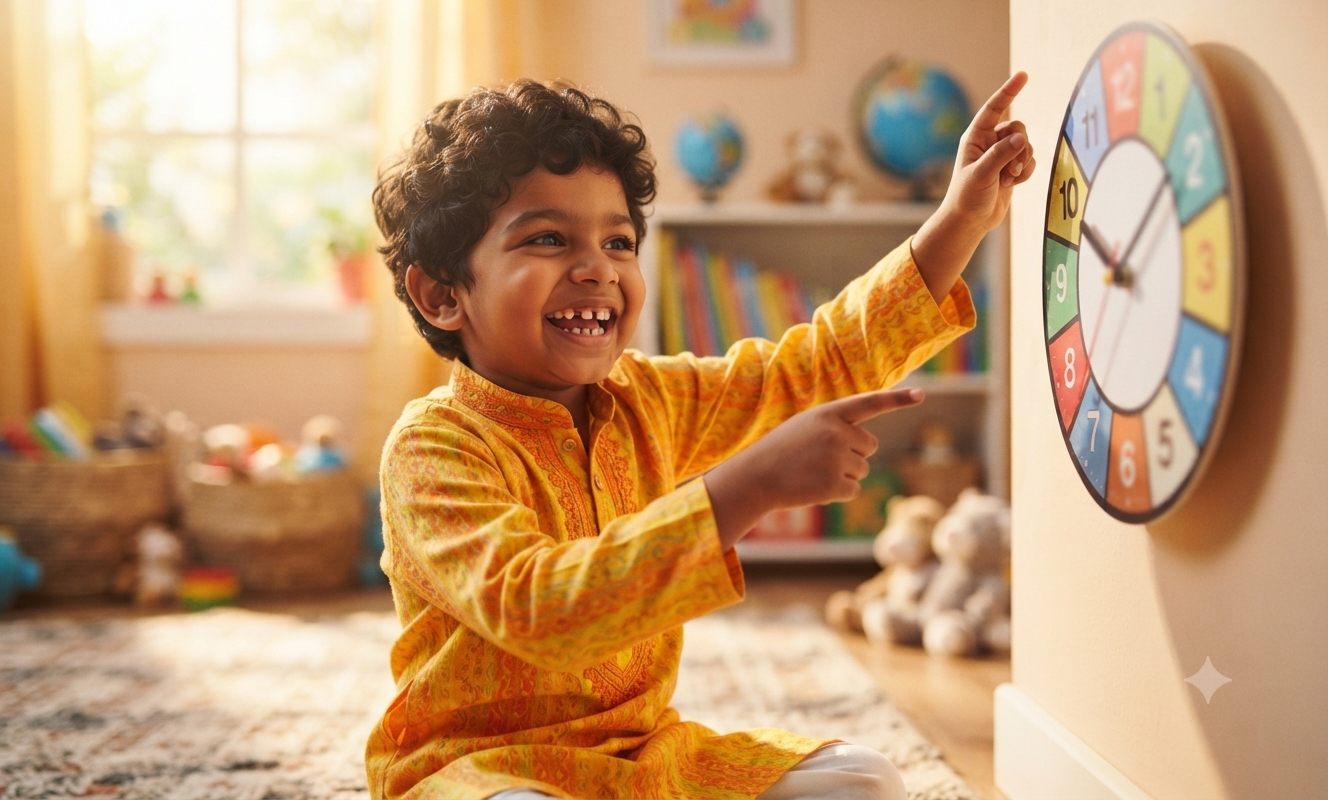
Let's Learn About Time!
Clocks, seconds, minutes, hours - and the whole world too
Time is all around us, from the ticking clock on the wall to the changing seasons across the year. On this page, explore live clocks from around the world, learn how seconds turn into minutes and hours, and watch a real digital and analog clock tick together.
How to Learn
See world clocks
Watch real ticking clocks from 8 countries around the world.
Pick any country
Choose from 190+ countries and see its clock instantly.
Learn time units
See how seconds, minutes, hours, days and years connect.
Watch the clock
See the digital and analog clock tick together, live.
World Clock - Live Time
Pick a Country
Digital Clock
Analog Clock
Time Units - Fun Facts
India's Clock - Digital & Analog
Digital Clock
Analog Clock
How the Analog Clock Works
Hour Hand (Chhoti Sui)
The shortest hand. It moves the slowest and takes 12 hours to go all the way around once.
Minute Hand (Badi Sui)
The longer hand. It moves faster than the hour hand and completes one full round every 60 minutes.
Second Hand (Sabse Tez Sui)
The thinnest and fastest hand. It completes one full round every 60 seconds - that's 1 whole minute!
Understanding time is one of the most practical skills a child can learn, helping them follow a daily routine, read a clock, and understand how a day, week, and year fit together. This page brings together live world clocks, a working digital and analog clock, and simple facts that connect seconds, minutes, hours, and days.
Seeing a real analog clock tick in real time, alongside its digital equivalent, helps children understand exactly how the hour, minute, and second hands relate to the numbers they already know.
Frequently Asked Questions
At what age should kids learn to read a clock?
Most children start learning to read an analog clock around age 6 to 7, once they are comfortable counting by 5s.
Why does the world have different time zones?
Different parts of the world see daylight at different times as the Earth rotates, so each region sets its clocks to match its own daylight hours.
What is the easiest way to teach kids about seconds, minutes and hours?
Showing how the second hand's full circle equals one minute, and the minute hand's full circle equals one hour, makes the relationship between the three units clear and visual.
How can I make learning about time fun for my child?
Watching a live clock tick, comparing time in different countries, and talking about time facts (like how many seconds are in a day) turns learning into a fun activity.