
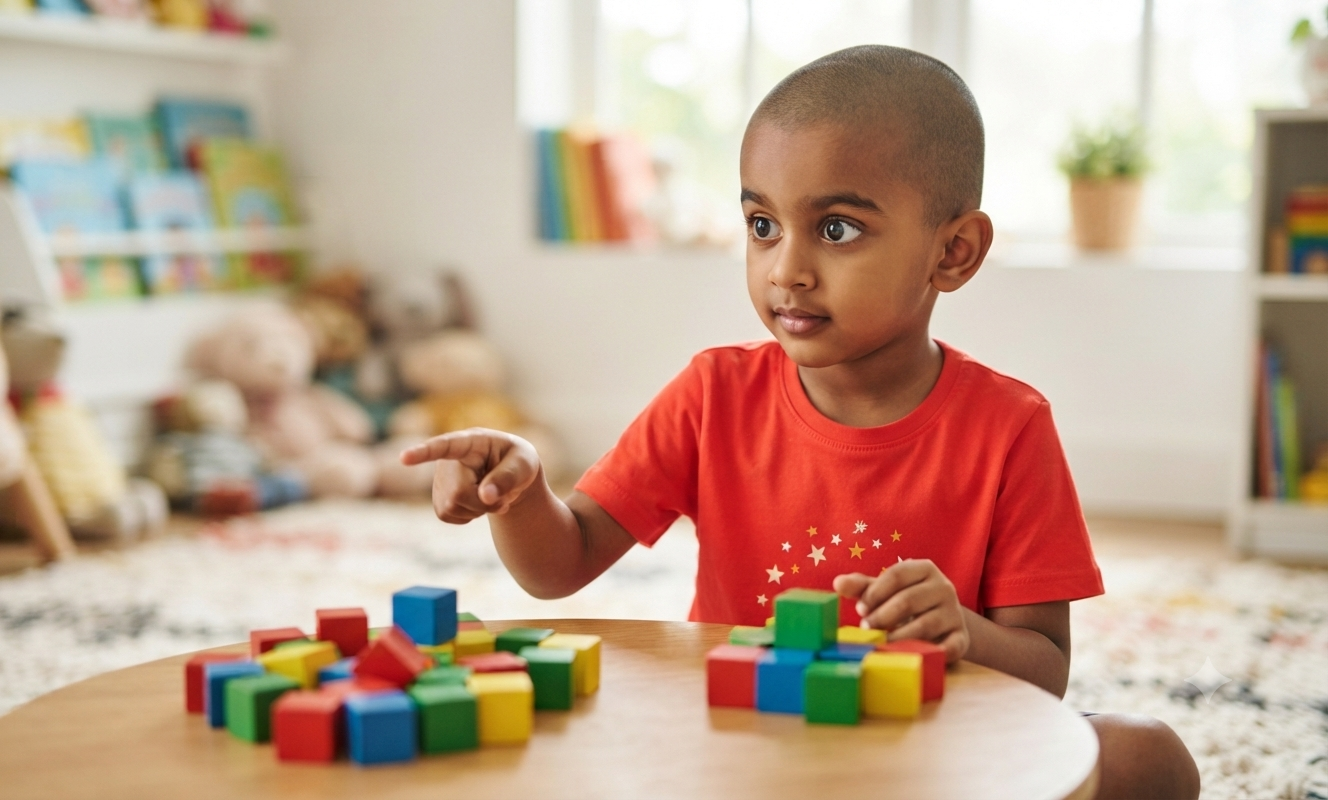
Which One Is Bigger?
Compare two groups and find out
Comparing numbers means figuring out which group has more, which has less, or if they are exactly the same. This page lets children pick two numbers and see them side by side, instantly showing which is bigger, smaller, or equal.
कौन सा बड़ा है?
दो समूहों की तुलना करें और पता लगाएं
संख्याओं की तुलना करने का मतलब है यह पता लगाना कि किस समूह में ज़्यादा है, किसमें कम है, या क्या वे बिल्कुल बराबर हैं। इस पेज पर, कोई भी दो संख्याएं चुनें और उन्हें साथ-साथ देखें, तुरंत दिखाते हुए कि कौन सी बड़ी, छोटी या बराबर है।
How Do You Compare Two Numbers?
Follow along, step by step
Count the First Group 🍎
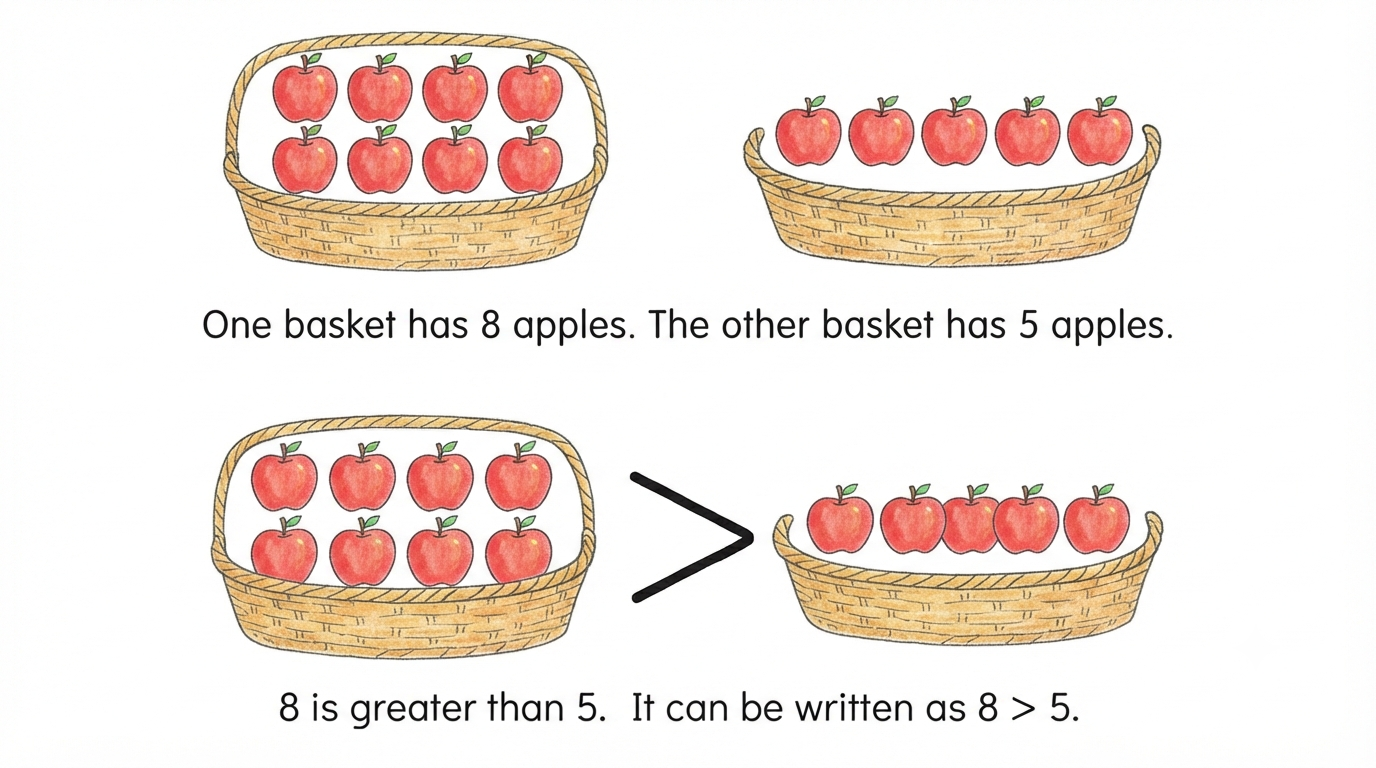
Let's say you have 8 apples in one basket. Count them carefully.
पहले समूह को गिनें
मान लीजिए एक टोकरी में आपके पास 8 सेब हैं। उन्हें ध्यान से गिनें।
Count the Second Group 🍓
Now count a second basket - let's say it has 5 strawberries. Count these carefully too.
दूसरे समूह को गिनें
अब दूसरी टोकरी गिनें - मान लीजिए उसमें 5 स्ट्रॉबेरी हैं। इन्हें भी ध्यान से गिनें।
See Which Has More ⚖️
Compare the two counts. 8 is more than 5, so the first basket has more - that means 8 is GREATER than 5.
देखें किसमें ज़्यादा है
दोनों गिनतियों की तुलना करें। 8, 5 से ज़्यादा है, तो पहली टोकरी में ज़्यादा है - मतलब 8, 5 से बड़ा (GREATER) है।
Use the Right Symbol ✍️
We write this as "8 > 5". Remember - the wide open side of the symbol always points toward the bigger number!
सही चिन्ह का इस्तेमाल करें
हम इसे "8 > 5" लिखते हैं। याद रखें - चिन्ह का चौड़ा खुला हिस्सा हमेशा बड़ी संख्या की ओर होता है!
Try It Yourself! 🎮
Use the tool above - pick any two numbers, click "Show Me!", and see which one wins.
खुद आज़माएं!
ऊपर दिए टूल का इस्तेमाल करें - कोई भी दो संख्याएं चुनें, "Show Me!" पर क्लिक करें, और देखें कौन बड़ा है।
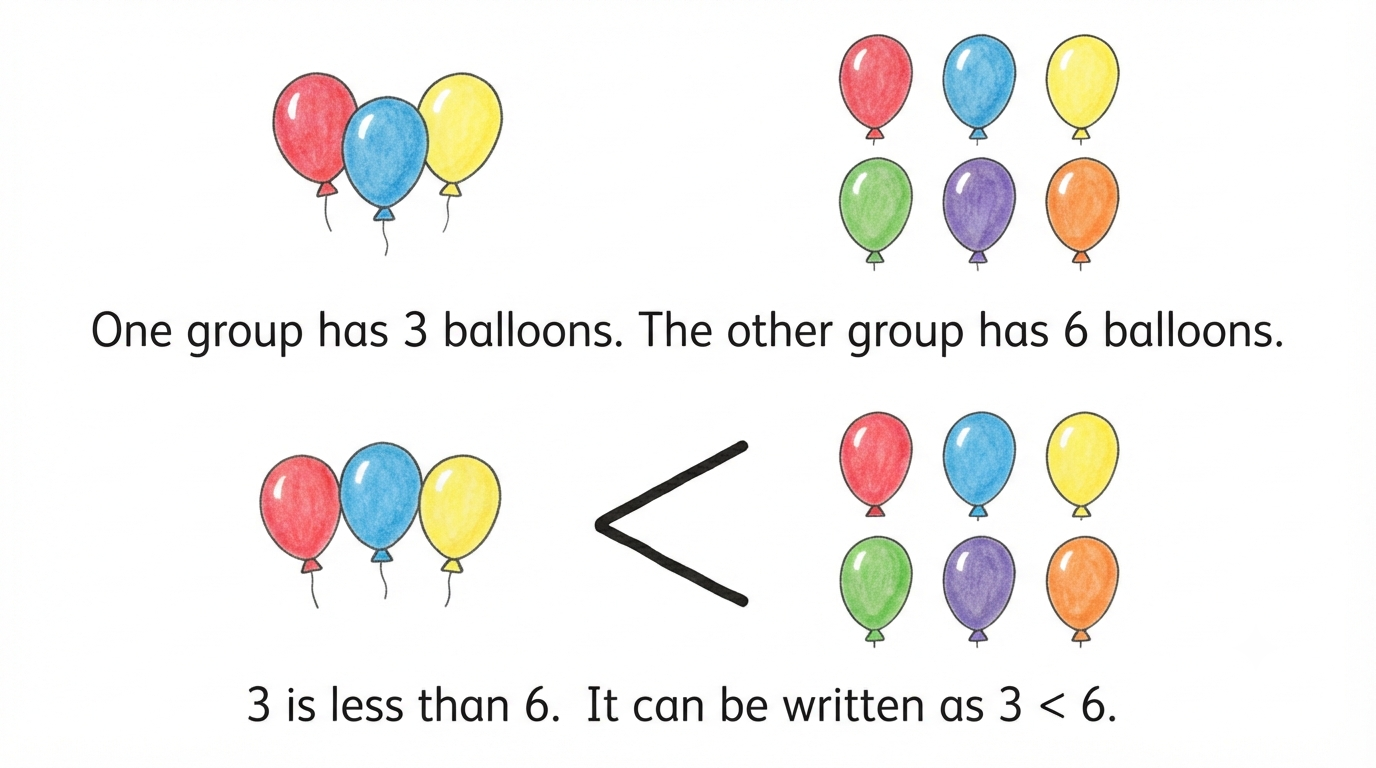
When we compare two numbers, there are only three possible answers: one number is bigger (greater than), one is smaller (less than), or they are exactly equal. The ">" sign means "greater than", the "<" sign means "less than", and "=" means "equal to".
A simple trick to remember the signs: the open, wide side of the symbol always faces the bigger number, like a hungry mouth opening toward the larger group!
जब हम दो संख्याओं की तुलना करते हैं, तो सिर्फ तीन संभव जवाब होते हैं: एक संख्या बड़ी है, एक छोटी है, या वे बिल्कुल बराबर हैं। ">" चिन्ह का मतलब है "से बड़ा", "<" चिन्ह का मतलब है "से छोटा", और "=" का मतलब है "के बराबर"।
चिन्हों को याद रखने की एक सरल तरकीब: चिन्ह का खुला, चौड़ा हिस्सा हमेशा बड़ी संख्या की ओर होता है, जैसे एक भूखा मुंह बड़े समूह की ओर खुल रहा हो!
Frequently Asked Questions
At what age should kids learn to compare numbers?
Most children start comparing small numbers, like which group has more, between ages 4 and 6, right around the same time they learn to count.
What is an easy trick to remember the > and < signs?
Think of the symbol as a hungry mouth - it always opens wide toward the bigger number, because it "wants to eat" the larger amount.
What is the best way to teach comparison to a young child?
Lining up two groups of real or visual objects side by side and counting each one makes it easy for children to see which group has more.
बच्चों को संख्याओं की तुलना करना किस उम्र में सिखानी चाहिए?
ज़्यादातर बच्चे 4 से 6 साल की उम्र में छोटी संख्याओं की तुलना करना शुरू करते हैं, लगभग उसी समय जब वे गिनना सीखते हैं।
> और < चिन्हों को याद रखने की एक आसान तरकीब क्या है?
चिन्ह को एक भूखे मुंह की तरह सोचें - यह हमेशा बड़ी संख्या की ओर चौड़ा खुलता है, क्योंकि यह बड़ी मात्रा को "खाना चाहता है"।
छोटे बच्चे को तुलना सिखाने का सबसे अच्छा तरीका क्या है?
असली या तस्वीर वाली चीज़ों के दो समूहों को साथ-साथ रखना और हर एक को गिनना बच्चों के लिए यह देखना आसान बना देता है कि किस समूह में ज़्यादा है।