
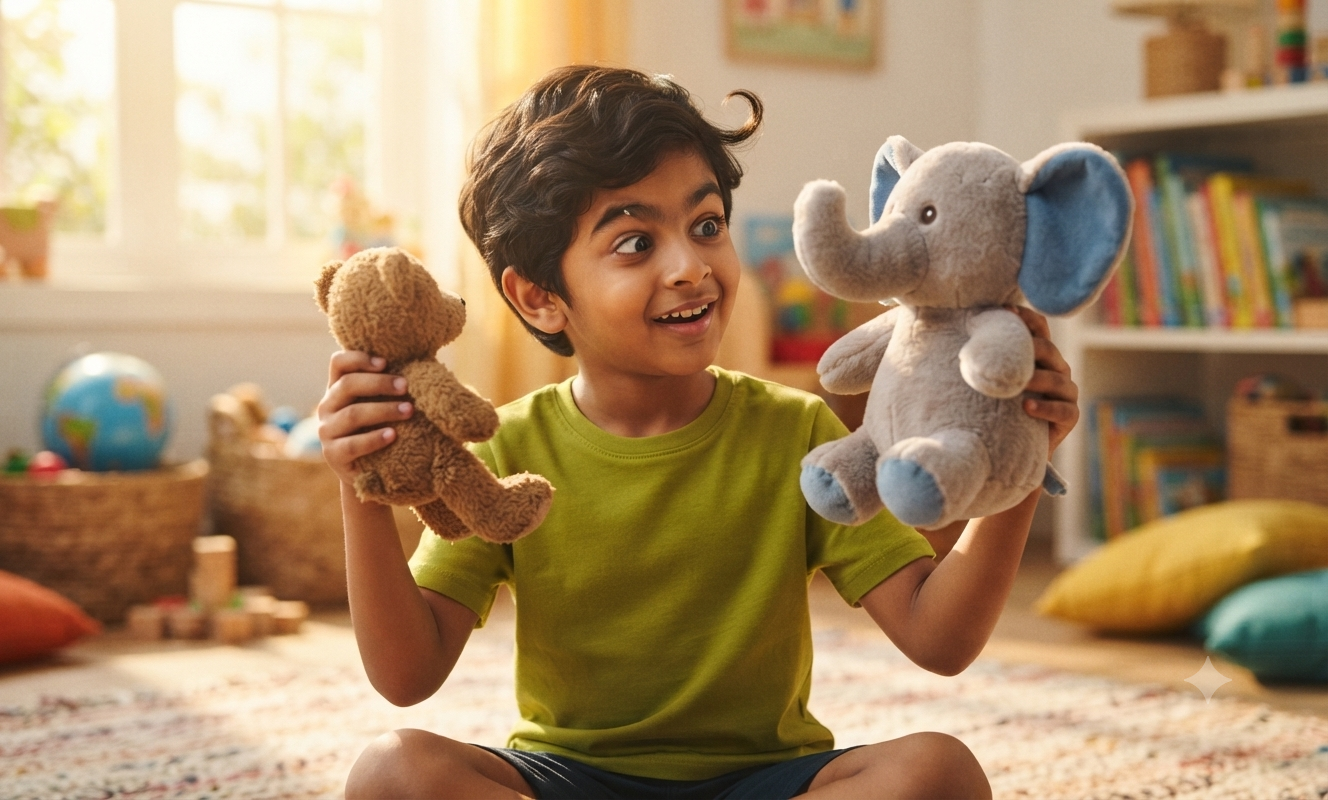
Long or Short? Heavy or Light?
Compare things and describe how they measure up
Before numbers on a ruler ever make sense, children learn to measure by simply comparing two things - which is longer, which is heavier. This page lets children pick two objects and instantly see which one wins each comparison.
लंबा या छोटा? भारी या हल्का?
चीज़ों की तुलना करें और बताएं कैसे मापी जाती हैं
फीते पर संख्याएं समझ आने से बहुत पहले, बच्चे सिर्फ दो चीज़ों की तुलना करके मापना सीखते हैं - कौन सी लंबी है, कौन सी भारी है। इस पेज पर, कोई भी दो चीज़ें चुनें और तुरंत देखें हर तुलना में कौन सी जीतती है।
How Do You Compare Two Things?
Follow along, step by step
Look at Both Things 👀
Let's say you have a pencil and a school bus toy. Look carefully at both of them.
दोनों चीज़ों को देखें
मान लीजिए आपके पास एक पेंसिल और एक स्कूल बस का खिलौना है। दोनों को ध्यान से देखें।
Line Them Up 📏
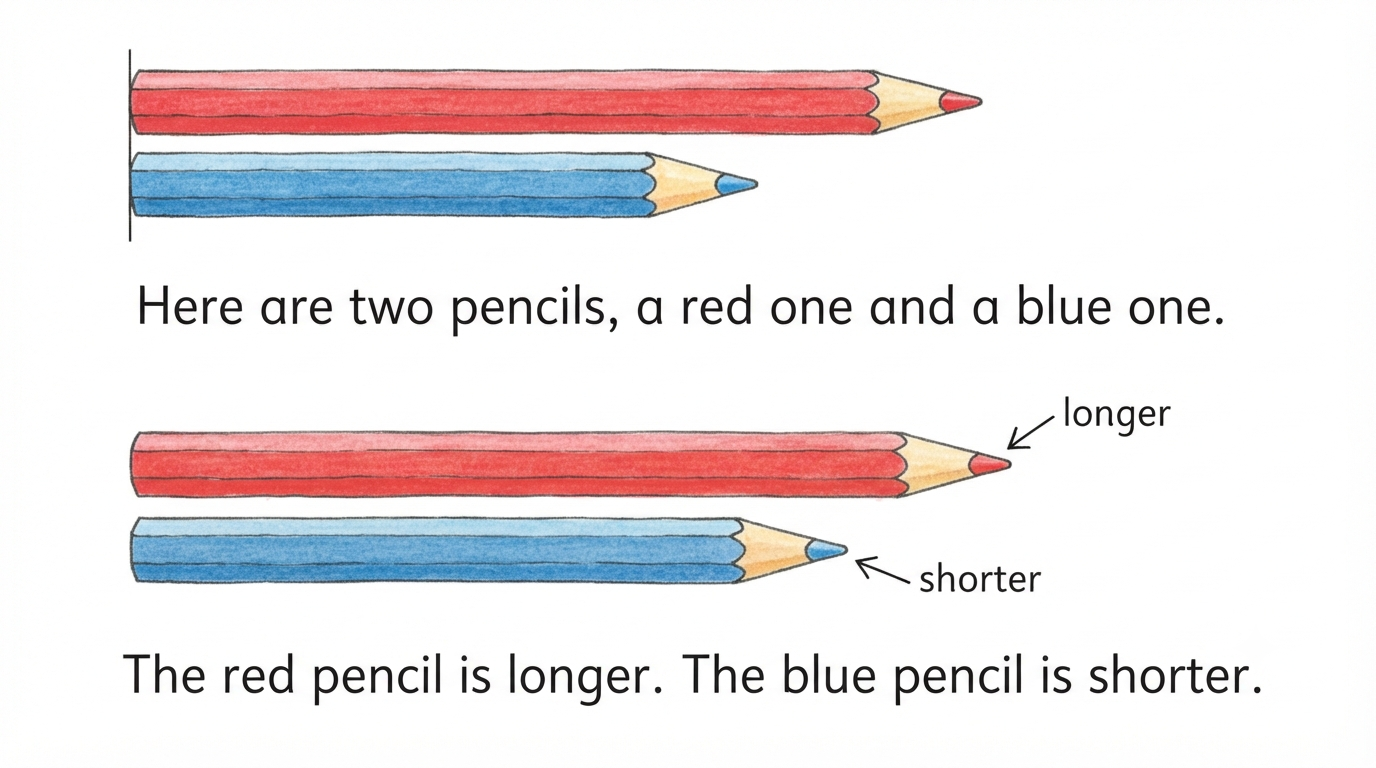
If you're comparing length, place both things next to each other, starting from the same point.
उन्हें एक साथ रखें
अगर आप लंबाई की तुलना कर रहे हैं, तो दोनों चीज़ों को एक ही जगह से शुरू करते हुए साथ-साथ रखें।
Compare Carefully ⚖️
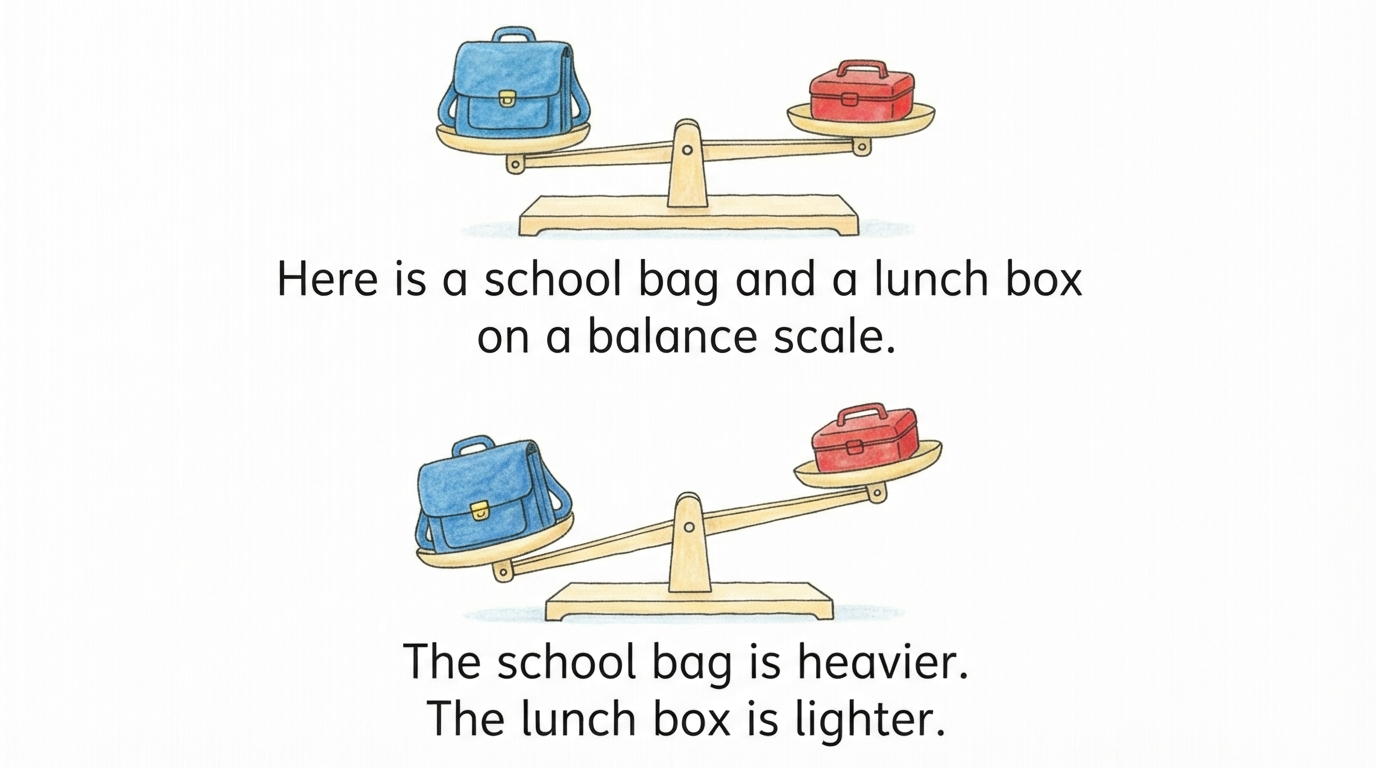
See which one stretches further, or feels heavier when you hold it. That one wins the comparison.
ध्यान से तुलना करें
देखें कौन सी चीज़ आगे तक फैलती है, या पकड़ने पर भारी महसूस होती है। वही तुलना जीतती है।
Say It Out Loud 🗣️
Use the words "longer" and "shorter", or "heavier" and "lighter", to describe what you found.
ज़ोर से बोलें
आपने जो पाया उसे बताने के लिए "लंबा" और "छोटा", या "भारी" और "हल्का" जैसे शब्दों का इस्तेमाल करें।
Try It Yourself! 🎮
Use the tool above - pick Length or Weight, click "Show Me!", and see which object wins.
खुद आज़माएं!
ऊपर दिए टूल का इस्तेमाल करें - लंबाई या वज़न चुनें, "Show Me!" पर क्लिक करें, और देखें कौन सी चीज़ जीतती है।
Measurement starts with simple comparison words, long before children ever use a ruler or a scale. Is the pencil longer or shorter than the crayon? Is the school bag heavier or lighter than the lunch box? These everyday comparisons build the foundation for all measurement later on.
This page lets children compare pairs of everyday objects side by side, choosing which is longer/shorter or heavier/lighter, so that these words become natural and easy to use in real life.
मापन सरल तुलना शब्दों से शुरू होता है, फीता या तराज़ू इस्तेमाल करने से बहुत पहले। क्या पेंसिल क्रेयॉन से लंबी है या छोटी? क्या स्कूल बैग लंच बॉक्स से भारी है या हल्का? ये रोज़मर्रा की तुलनाएं आगे चलकर सारे मापन की नींव बनाती हैं।
इस पेज पर बच्चे रोज़मर्रा की चीज़ों के जोड़ों की साथ-साथ तुलना कर सकते हैं, चुनते हुए कि कौन सी लंबी/छोटी या भारी/हल्की है, ताकि ये शब्द असल ज़िंदगी में इस्तेमाल करने के लिए स्वाभाविक और आसान बन जाएं।
Frequently Asked Questions
At what age should kids start learning about measurement?
Most children start comparing things like long/short and heavy/light between ages 4 and 6, well before they use rulers or scales with numbers.
What is the easiest way to teach measurement to a young child?
Comparing two real, everyday objects side by side - like two pencils or two toys - and asking which is longer or heavier helps children understand measurement in a hands-on way.
Why is comparison an important first step before using rulers?
Comparison helps children understand what "longer" or "heavier" actually mean in a real, physical sense, which makes using a ruler or scale with numbers much easier to understand later.
बच्चों को मापन (measurement) किस उम्र से सिखाना चाहिए?
ज़्यादातर बच्चे 4 से 6 साल की उम्र में लंबा-छोटा और भारी-हल्का जैसी तुलनाएं करना शुरू करते हैं, संख्याओं वाले स्केल या फीते इस्तेमाल करने से काफ़ी पहले।
छोटे बच्चे को मापन सिखाने का सबसे आसान तरीका क्या है?
दो असली, रोज़मर्रा की चीज़ों की साथ-साथ तुलना करना - जैसे दो पेंसिलें या दो खिलौने - और पूछना कौन सा लंबा या भारी है, बच्चों को व्यावहारिक तरीके से मापन समझने में मदद करता है।
फीता इस्तेमाल करने से पहले तुलना करना एक ज़रूरी पहला कदम क्यों है?
तुलना बच्चों को यह समझने में मदद करती है कि "लंबा" या "भारी" का असली, भौतिक मतलब क्या है, जिससे आगे चलकर संख्याओं वाले फीते या तराज़ू का इस्तेमाल समझना बहुत आसान हो जाता है।